How Much Silver Clay Do I Need for a Ring?
By William, SILVERCRAFT co-founder | 6 min read | Updated July 2026
Someone in one of our first test sessions asked me this before she even opened the box. She wanted to know if 5 grams was actually enough or if we were setting her up for a ring that fell apart halfway through. Fair question.
The short version: 5 grams is enough for one ring. A standard band, maybe 3mm to 4mm wide, uses somewhere between 3.5 and 4.5 grams. You'll have a bit left. If you want something wider, you start cutting it close.
But the actual gram count isn't really the question people are asking. They want to know if they'll run out mid-session, whether the ring will be too thin, whether they're buying the right amount. Those are slightly different questions. I'll go through all of them.
The number, upfront
3mm band: about 3 to 3.5 grams. 4mm band: closer to 4 to 4.5 grams. 5mm or wider: you're pushing into 5 grams or past it. The 5g pack covers the first two comfortably. The third one is where you start measuring your trims.
Quick reference: 3mm band = ~3-3.5g | 4mm band = ~4-4.5g | 5mm+ = 5g+ | Pendant = 2-3g | Pair of studs = 1-2g
Ring size doesn't move the number much, honestly. Going from a size 6 to a size 9 just means rolling the clay a bit longer. The cross-section stays the same. In practice, the difference across common ring sizes is under half a gram. Not worth stressing about.
Band width is the main thing
The width of the band is what drives how much clay you use. Not the ring size, not whether you add a texture. Width.
Thickness matters too, to a point. The standard for a ring band is about 1.5mm thick. Thinner than that and you get something fragile. Thicker and you're using more clay without making the ring noticeably sturdier. 1.5mm is where most people land and it fires well.
Texture doesn't add clay. When you press a coin or a piece of mesh into wet silver clay, you're displacing the surface, not adding to it. The weight before and after pressing is the same. I mention this because some people assume texture means more material. It doesn't.
The one thing that does add clay: setting a stone. If you're pressing a gemstone into the band, you need a collar of clay around it so there's enough material to hold the stone after the ring fires and shrinks. Budget roughly half a gram extra for a single stone.
Shrinkage doesn't eat your silver
Silver clay shrinks about 12% when it fires. The binder burns off and the silver particles compress. The ring comes out smaller than what you shaped.
What doesn't really change is the weight. You put in 4 grams of clay, you get out something very close to 4 grams of fine silver. The binder is a tiny fraction of the total. You're not losing silver to the firing process.
What you ARE losing is size. A ring shaped at size 10 on the mandrel comes out around size 7 after firing. Always shape three full sizes larger than your target. The ring sizer in the kit gives you the starting point. This is the mistake that costs people a ring, not the clay weight.
Ring size rule: shape 3 sizes up from your target. Size 7 goal = shape at size 10. The clay weight stays the same. The size doesn't.
In our test sessions, the people who ended up with rings they couldn't wear weren't running out of clay. They'd shaped at the right size and forgotten about the shrinkage. That's fixable if you know about it. Less fixable once the ring is already fired.
Full firing guide: How to Fire Silver Clay at Home (No Kiln Needed)
What to do with the leftovers
After you close the band and trim the join, you'll usually have some clay left. Sometimes a good chunk of it. Keep it.
Wrap unused clay tight in plastic, squeeze the air out, and store it somewhere that doesn't get hot. If it dries out between sessions, two or three drops of water and a minute of kneading brings it back. Silver clay is more forgiving than people expect.
Even the dry stuff is useful. Crumble dried scraps, add a few drops of water, mix it into a thick paste. That paste is your repair material. Hairline cracks before firing, attachment points, filling small gaps. Some people save their sanding dust specifically for this. It sounds fussy until the first time you actually need it.
The short version: don't throw any of it away. Silver clay, even in small amounts, is worth keeping.
The 5g question
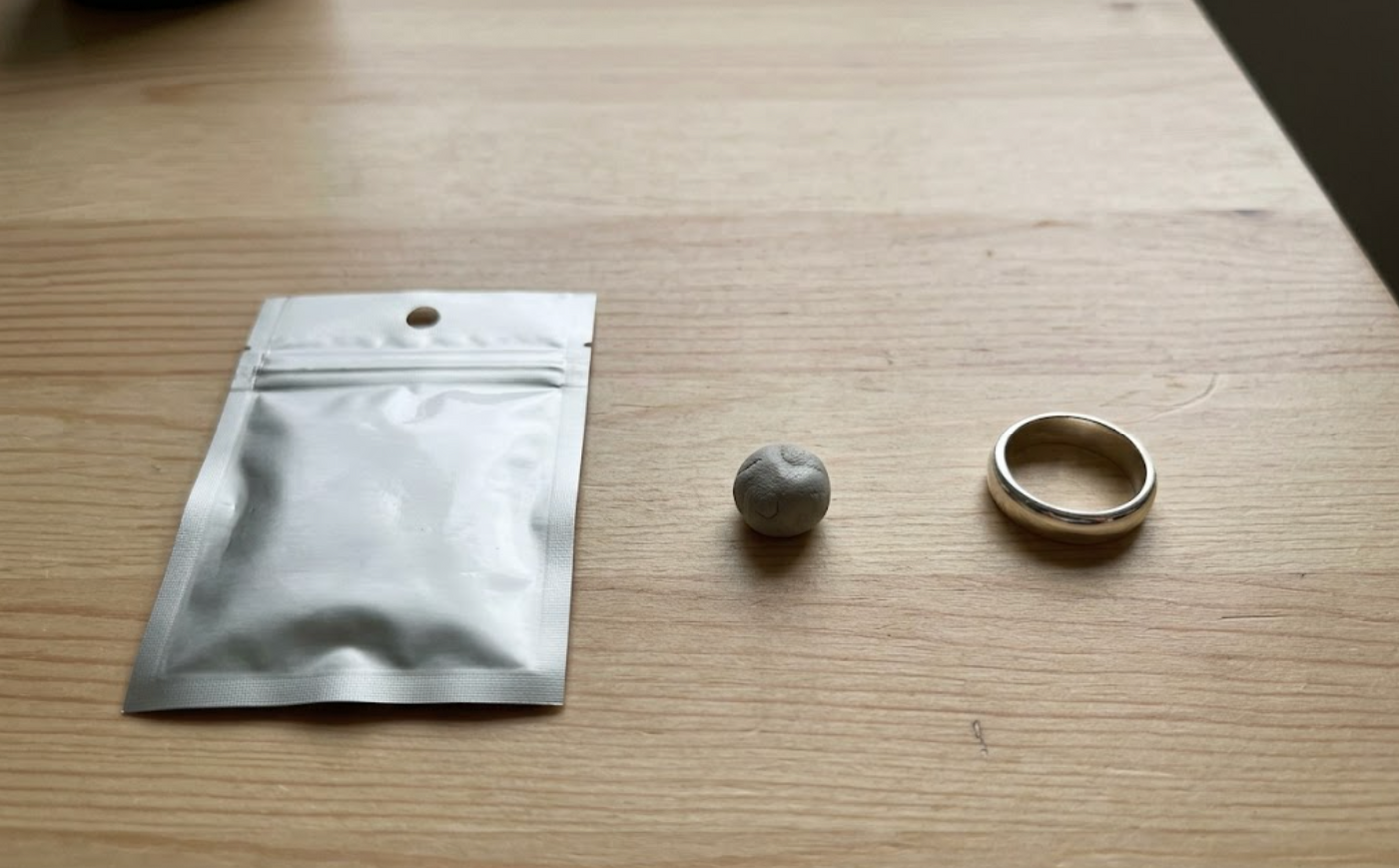
The RingLab kit has 5 grams of silver clay. Here's what that actually looks like in practice.
One ring with a 3mm or 4mm band: straightforward. You'll have leftover. Enough for texture experiments or a small repair.
One 5mm statement band: doable. Not a lot of margin. Roll carefully, be precise with your trims, and you'll get there. Most people shaping for the first time are better off with 3mm or 4mm anyway. Wider bands are harder to roll evenly and harder to join cleanly.
Two rings from one pack: possible in theory. In practice, the second ring ends up thinner or narrower than the first because you're working with less material than you'd like. One pack per person is the right way to do it. That's why the Duo kit has two packs.
A pendant after the ring: fine. Pendants use 2 to 3 grams depending on size. Make the ring first, see what's left, work with it.
The Duo kit: 2x5g in one box. Two rings, one session, two people. Couples, friends, mothers and daughters. See the RingLab Duo Kit
One session where we nearly ran short
One of the women in our early test sessions had decided she wanted something wider than the standard 3mm. Didn't tell anyone until she was already rolling.
She shaped a 5mm band, trimmed the join, and had maybe 0.3 grams left. That's not a comfortable margin. She fired it, polished it, and the ring was good. Better than good. But then she looked at her other hand.
She wanted a matching one.
There wasn't enough clay. She'd used 4.7 out of 5 grams on the first ring. We gave her a second pack for the following week. The point isn't that 5 grams is insufficient. It's that if you know you want wider than 4mm, have a second pack on hand. That's not wasteful. It's just planning. Both kit pages let you pick how many rings you want, which is the easy way to do it.
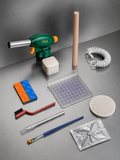
The RingLab Silver Clay Kit has 5g of clay and everything you need to fire it. One butane canister from the hardware store and you're set. Free standard shipping, duties paid.
Read next
How to Fire Silver Clay at Home (No Kiln Needed)
What Is Silver Clay? The Complete Beginner's Guide
Silver Clay Troubleshooting: Dried Out, Cracking, Won't Fire?
- William, SILVERCRAFT co-founder
ready to make your own?
Everything you need in one box. Shape it, fire it, wear 99.9% fine silver.
Shop the kits →